COVER
Jungle
Finding Their Sunshine
By Sophie Cino
Publishing date: Jul 07, 2026
J
Jungle have never been a band content to make the same record twice. Across four albums, their project has moved through moods and eras like a mixtape assembled with intention: brash on Volcano, meditative on Loving in Stereo, and now, on Sunshine, something looser. Warmer.
The title track began life years ago, reworked into something that anchors the whole record. “For us, I think sunshine is kind of a place or a feeling,” Lloyd-Watson says. “It’s almost about battling the low times, you know, when things aren’t feeling so great. So I think sunshine became more of a place for us, a way of being and a way of living.”
That reframing runs through the album’s DNA. Where Volcano leaned into extroversion, songs like “Us Against the World” and “I’m a Celebrity” carrying what Lloyd-Watson calls a “brash, a little bit bratty” energy, Sunshine pulls from a different lineage in the Jungle catalogue: “Dominoes,” “I’ve Been in Love,” “Back on 74,” “Casio.” Tracks defined less by spectacle and more by groove.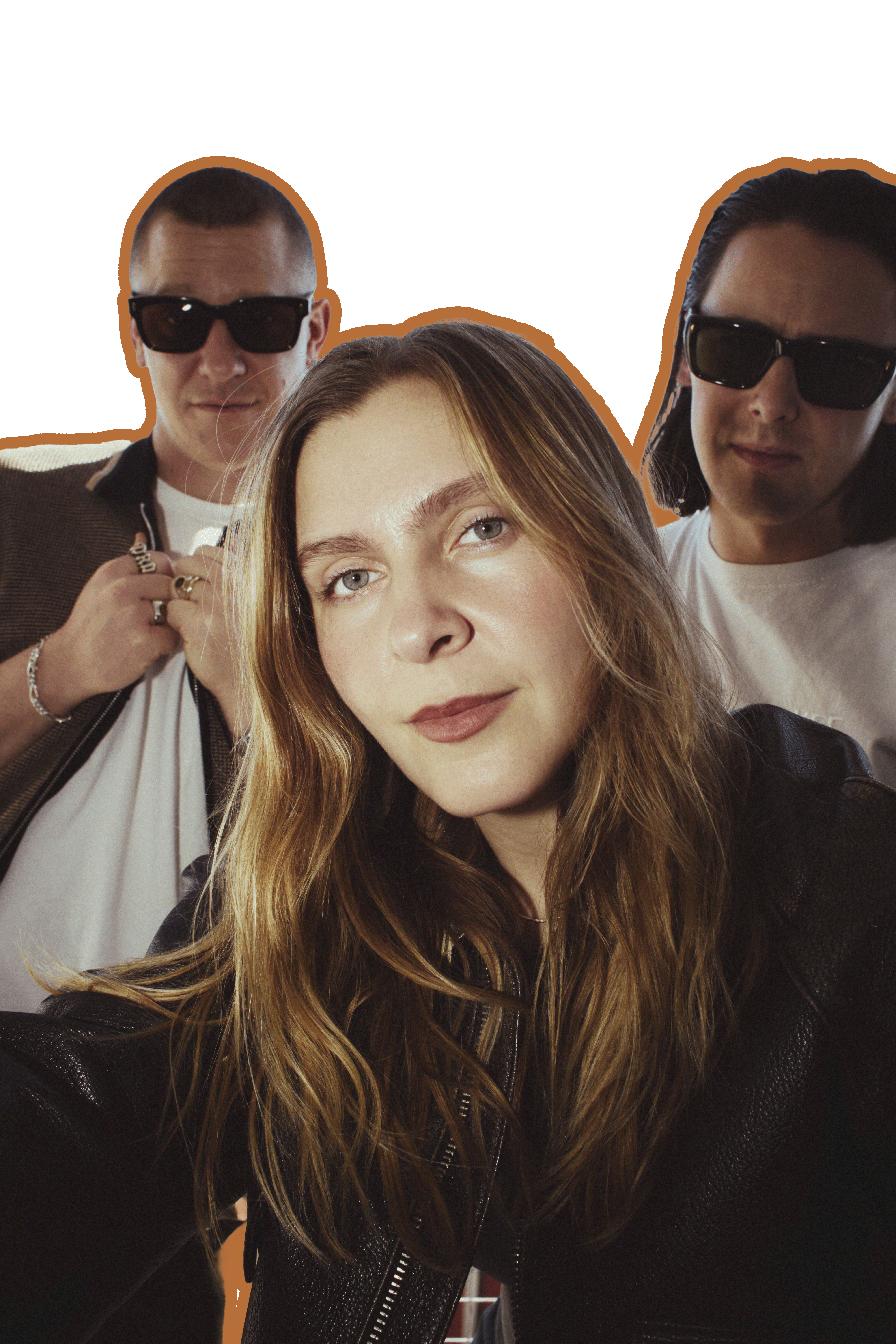
Jungle have never been a band content to make the same record twice. Across four albums, their project has moved through moods and eras like a mixtape assembled with intention: brash on Volcano, meditative on Loving in Stereo, and now, on Sunshine, something looser. Warmer.
The title track began life years ago, reworked into something that anchors the whole record. “For us, I think sunshine is kind of a place or a feeling,” Lloyd-Watson says. “It’s almost about battling the low times, you know, when things aren’t feeling so great. So I think sunshine became more of a place for us, a way of being and a way of living.”
That reframing runs through the album’s DNA. Where Volcano leaned into extroversion, songs like “Us Against the World” and “I’m a Celebrity” carrying what Lloyd-Watson calls a “brash, a little bit bratty” energy, Sunshine pulls from a different lineage in the Jungle catalogue: “Dominoes,” “I’ve Been in Love,” “Back on 74,” “Casio.” Tracks defined less by spectacle and more by groove.
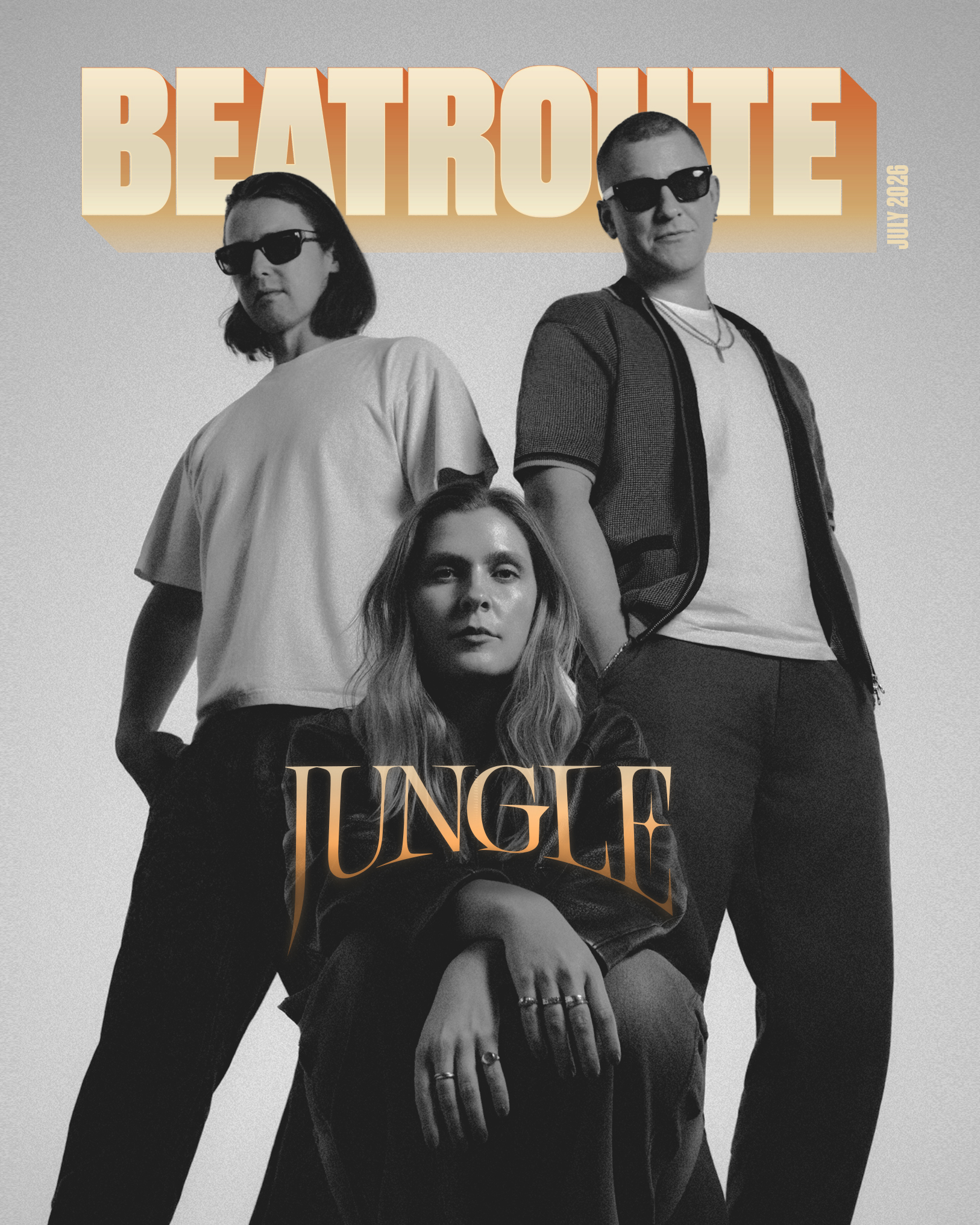
Finding Their Sunshine
Lead single “Carry On” opens the record, though Lloyd-Watson resists the idea that it was chosen for any grand thematic reason. “It felt like it connected to some of the bigger songs from the last record and where ‘Let’s Go Back’ had left off,” he says. “It felt like a bridge from Volcano.” He describes it as an outlier too, “almost like a Jungle folk song,” a hint at the wider stylistic range the album explores once “The Wave” and “Someday Somewhere” carry the momentum forward.
Ask what he hopes lingers after a full listen, and it’s Kitto who answers. “Feelings of nostalgia,” she says, “and maybe that it’s lifted them out of whatever feeling they were in. I think it can go both ways. You can put it on if you’re sad or if you’re happy, and it takes you through the journey of both of those emotions.”
Sunshine also marks a shift in the band’s internal structure. Kitto, long a creative presence around Jungle, is now a full member. “I don’t think it has changed really, if I’m honest. I think it still feels the same. Maybe I have a bit more of a say in the final songs or what songs make it onto the album, but other than that, it’s literally the same.”
Lloyd-Watson sees it differently. Asked whether her presence as an equal voice pushed the songwriting somewhere new, his answer is immediate. “One hundred percent,” he says. “Anybody just has to be around Lydia, listen to Lydia, or be in her presence to understand that you’re in the presence of greatness.” He describes Jungle’s sound as something built on a shared vision and production style, but says Kitto brings a different gift entirely: “this ability to connect emotionally to the root of what it’s all about. She’s the bridge to the audience in that way.”
With their biggest tour yet on the horizon, the band is already deep into the visual world that will accompany the songs. “We’re building the visuals that are going on the back screen, so we’ve taken full control of that,” Lloyd-Watson says, adding that incorporating more movement and elements from Jungle’s short films into the live show is “the next step.”
But he’s candid about the environment touring artists are working in right now. “Touring is in a pretty dire situation right now,” he says. “It’s very difficult because things cost a lot of money, and people don’t have the money to go to shows as much anymore.” He points to high-profile tour cancellations elsewhere in the industry as evidence of just how strained things have become, and admits that meeting audience expectations at arena scale, the lasers, the spectacle, the sense of event, is harder to deliver consistently than it looks.
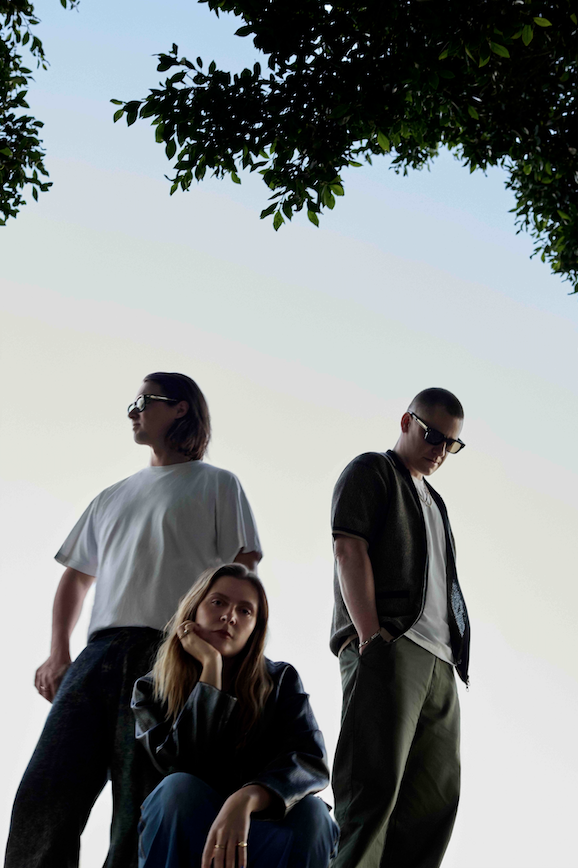
Jungle’s visual identity has always run parallel to the music, and the band’s approach to video has become almost as recognizable as the songs themselves. Kitto is clear that choreography stays separate from the writing process. “Once the song’s finished, we collaborate with a choreographer and piece the videos together, but it’s never really part of writing the song itself,” she says.
That efficiency-minded philosophy, one-take performance videos shot in bulk, traces back to a fight with their label over “Casio.” Told they couldn’t make a video for the track, the band did it anyway. It has since passed 100 million views. “It proved to us that the fan favourites aren’t always the songs the label thinks will take off,” Lloyd-Watson says.
Years later, “Back on 74” would repeat that pattern on a much bigger scale, becoming inescapable on social media in a way Kitto describes as disorienting. “Every time I’d open TikTok or Instagram I’d hear the song,” she says. “It got to the point where I almost disassociated from my own voice because it was everywhere.” Still, she calls the experience of watching people learn the dance “really exciting and lovely.”
In the studio, the band has moved further from polish, not closer to it. “We’ve really embraced first takes and approached it more like abstract painting,” Lloyd-Watson says. Kitto is even more direct about the reasoning. “No tuning,” she says. “It has to have character and feeling. Tuners just remove that. That’s why a lot of pop music sounds dead.”
That instinct was tested by the album’s compressed timeline. Inspired partly by the pace at which The Beatles once worked, the band gave themselves two months at the start of 2026 to finish the record, tour dates already locked in behind them. “Suddenly it’s mid-February, your deadline is the end of February, and you’re asking yourself, have we actually got this? Are we ready?” Lloyd-Watson says. “The real world is waiting, and that’s where the pressure really came from.”
Asked to sum up this era in three words, not including the album title, the band answers together, without hesitation: Cinematic. Euphoric. Warm.
Photographer: Mason Rose
